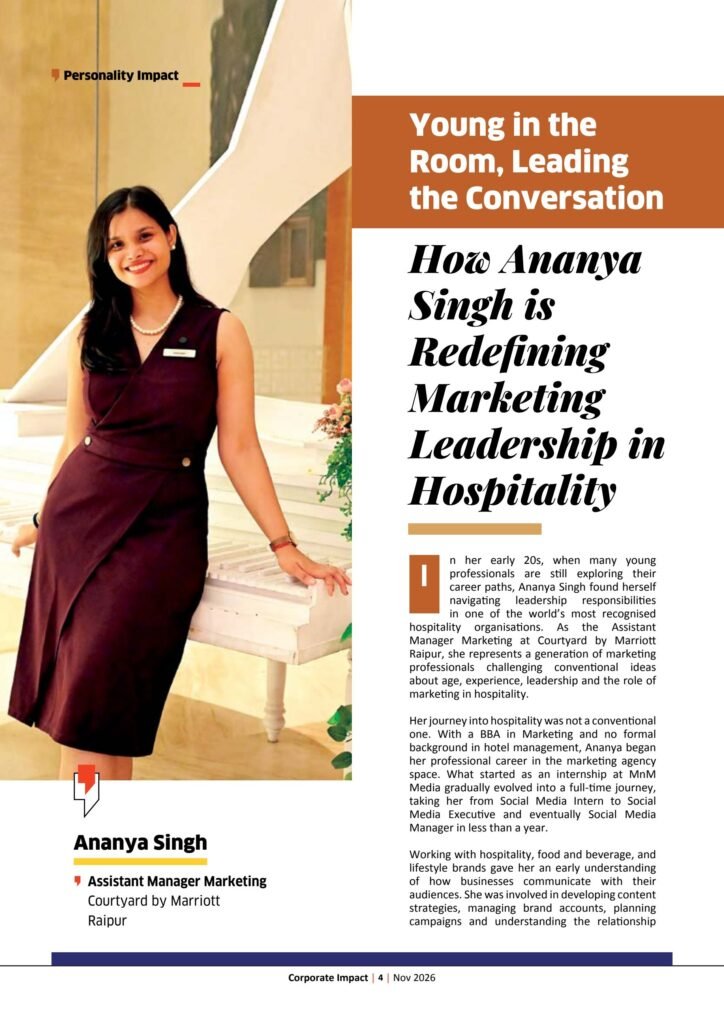



How Ananya Singh is Redefining Marketing Leadership in Hospitality
Assistant Manager Marketing
Courtyard by Marriott
Raipur
In her early 20s, when many young professionals are still exploring their career paths, Ananya Singh found herself navigating leadership responsibilities in one of the world’s most recognised hospitality organisations. As the Assistant Manager Marketing at Courtyard by Marriott Raipur, she represents a generation of marketing professionals challenging conventional ideas about age, experience, leadership and the role of marketing in hospitality.
Her journey into hospitality was not a conventional one. With a BBA in Marketing and no formal background in hotel management, Ananya began her professional career in the marketing agency space. What started as an internship at MnM Media gradually evolved into a full-time journey, taking her from Social Media Intern to Social Media Executive and eventually Social Media Manager in less than a year.
Working with hospitality, food and beverage, and lifestyle brands gave her an early understanding of how businesses communicate with their audiences. She was involved in developing content strategies, managing brand accounts, planning campaigns and understanding the relationship between brand perception and consumer behaviour.
One of her early defining experiences was working on the launch of Four Points by Sheraton Nashik, where she was involved in the campaign journey from planning and content strategy to the launch communication. It was here that hospitality marketing began to become more than just another industry vertical for her.
Taking a different route into hospitality
Moving from an agency environment into hotel operations was a significant transition. Unlike an agency, where marketing often operates as a dedicated function, hotel marketing requires an understanding of multiple business verticals. It involves working closely with Sales, Revenue, Food and Beverage, Culinary, Operations and leadership teams.

At Courtyard by Marriott Raipur, Ananya stepped into a role that required her to look beyond conventional marketing deliverables. Her approach was to establish marketing as a business-support function, one that contributes to revenue generation, brand positioning, reputation management, customer engagement and the overall commercial performance of the property.
One of the biggest challenges was changing the perception of what marketing actually does within a hotel.
Marketing is sometimes viewed as a function responsible primarily for social media posts, photography, promotional creatives and event announcements. While these are important touchpoints, they represent only a fraction of the function’s responsibilities.
For Ananya, the bigger opportunity was to demonstrate how marketing could influence the way a hotel is perceived, how effectively it reaches its target audience, how its food and beverage offerings are positioned, and how it builds relationships with the local market.
This meant taking ownership of public relations, media relationships, influencer collaborations, digital communication, F&B campaigns and brand storytelling. It also meant working closely with other departments to ensure that marketing initiatives translated into meaningful business outcomes.
The results began reflecting this approach. The property’s public relations visibility grew significantly, with annual PR articles increasing from 5 in FY 2024–25 to 45 in FY 2025–26. The hotel’s Instagram presence also grew organically to 5,000 followers after a prolonged period of limited activity.
Beyond numbers, campaigns and food festivals became opportunities to create stronger connections between the property and its local audience. These initiatives demonstrated that a hotel is not simply a place where people stay; it can also be a destination for dining, celebrations, experiences and community engagement.
The youngest in the room: Learning to
lead beyond your age
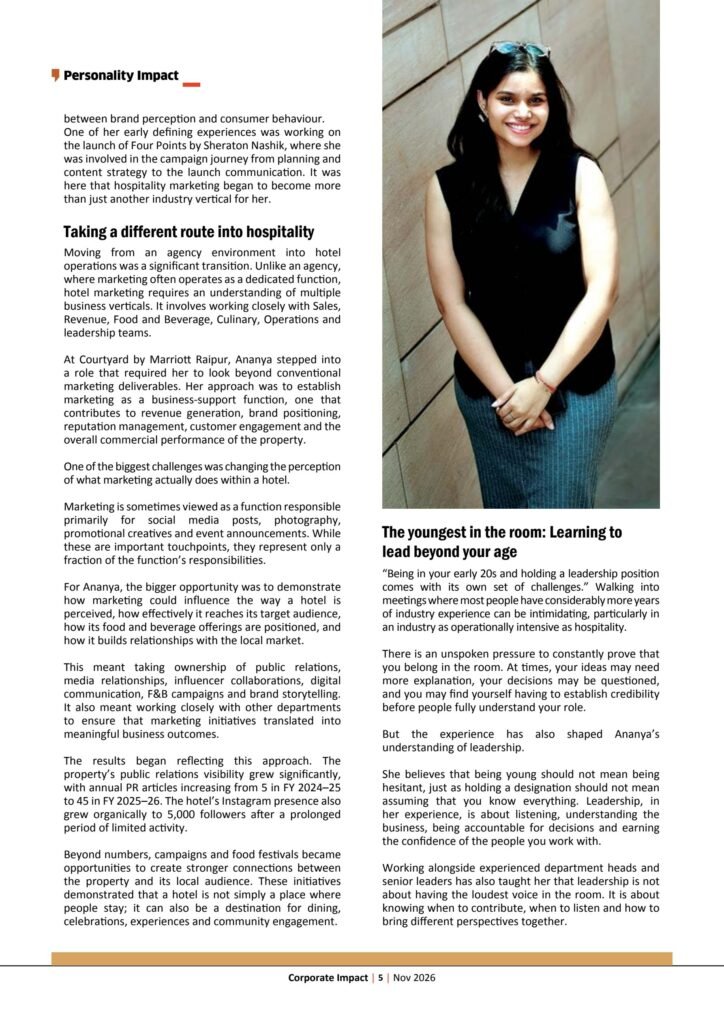
“Being in your early 20s and holding a leadership position comes with its own set of challenges.” Walking into meetings where most people have considerably more years of industry experience can be intimidating, particularly in an industry as operationally intensive as hospitality.
There is an unspoken pressure to constantly prove that you belong in the room. At times, your ideas may need more explanation, your decisions may be questioned, and you may find yourself having to establish credibility before people fully understand your role.
But the experience has also shaped Ananya’s understanding of leadership.
She believes that being young should not mean being hesitant, just as holding a designation should not mean assuming that you know everything. Leadership, in her experience, is about listening, understanding the business, being accountable for decisions and earning the confidence of the people you work with.
Working alongside experienced department heads and senior leaders has also taught her that leadership is not about having the loudest voice in the room. It is about knowing when to contribute, when to listen and how to bring different perspectives together.
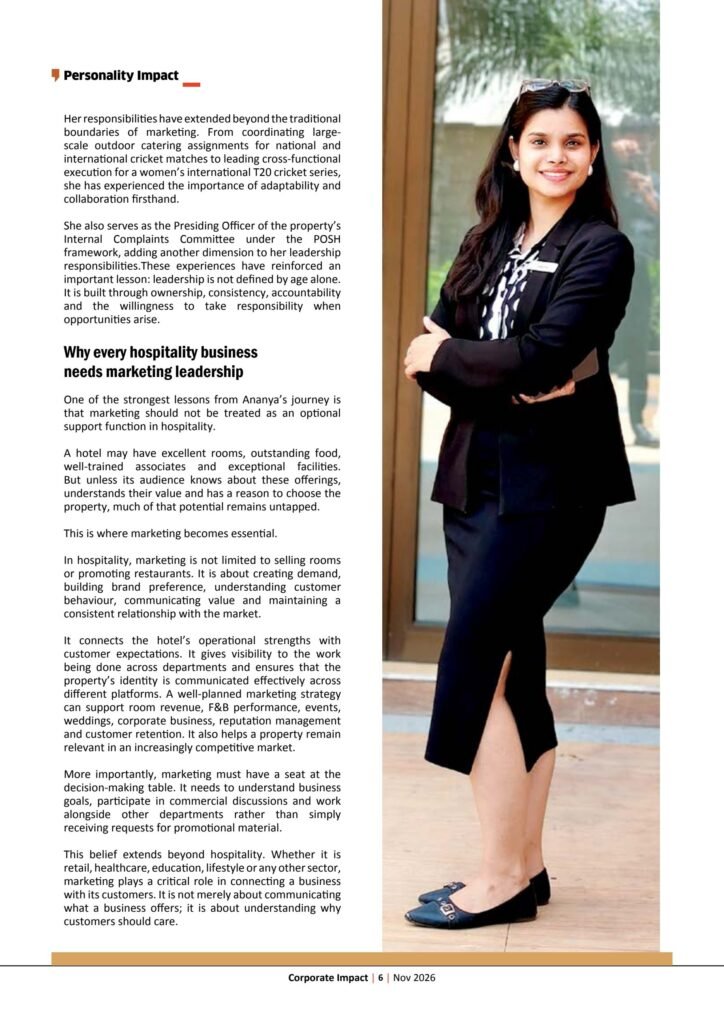
Her responsibilities have extended beyond the traditional boundaries of marketing. From coordinating large-scale outdoor catering assignments for national and international cricket matches to leading cross-functional execution for a women’s international T20 cricket series, she has experienced the importance of adaptability and collaboration firsthand.
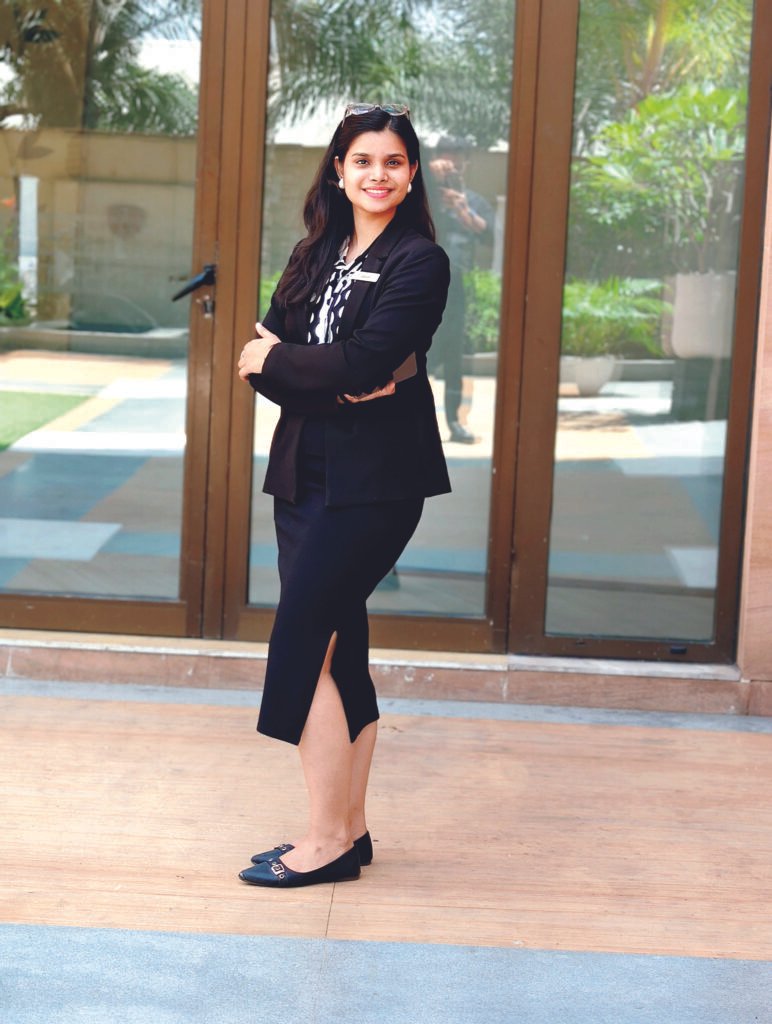
She also serves as the Presiding Officer of the property’s Internal Complaints Committee under the POSH framework, adding another dimension to her leadership responsibilities.These experiences have reinforced an important lesson: leadership is not defined by age alone. It is built through ownership, consistency, accountability and the willingness to take responsibility when opportunities arise.
Why every hospitality business
needs marketing leadership
One of the strongest lessons from Ananya’s journey is that marketing should not be treated as an optional support function in hospitality.
A hotel may have excellent rooms, outstanding food, well-trained associates and exceptional facilities. But unless its audience knows about these offerings, understands their value and has a reason to choose the property, much of that potential remains untapped.
This is where marketing becomes essential.
In hospitality, marketing is not limited to selling rooms or promoting restaurants. It is about creating demand, building brand preference, understanding customer behaviour, communicating value and maintaining a consistent relationship with the market.
It connects the hotel’s operational strengths with customer expectations. It gives visibility to the work being done across departments and ensures that the property’s identity is communicated effectively across different platforms. A well-planned marketing strategy can support room revenue, F&B performance, events, weddings, corporate business, reputation management and customer retention. It also helps a property remain relevant in an increasingly competitive market.
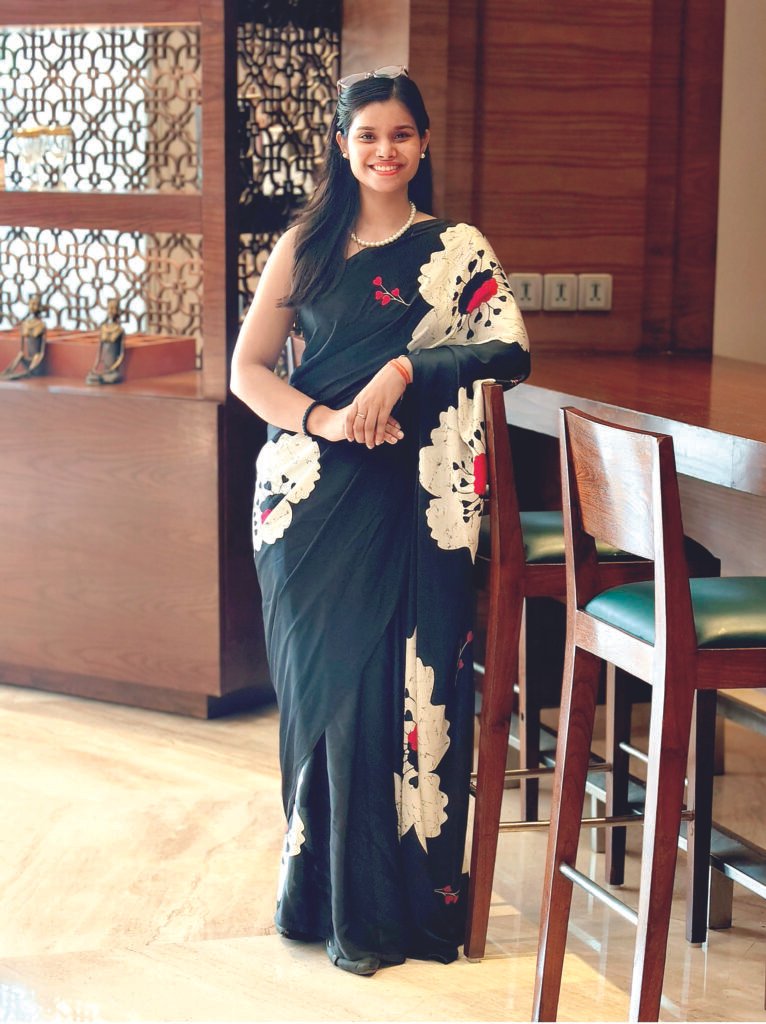
More importantly, marketing must have a seat at the decision-making table. It needs to understand business goals, participate in commercial discussions and work alongside other departments rather than simply receiving requests for promotional material.
This belief extends beyond hospitality. Whether it is retail, healthcare, education, lifestyle or any other sector, marketing plays a critical role in connecting a business with its customers. It is not merely about communicating what a business offers; it is about understanding why customers should care.
A career still being written
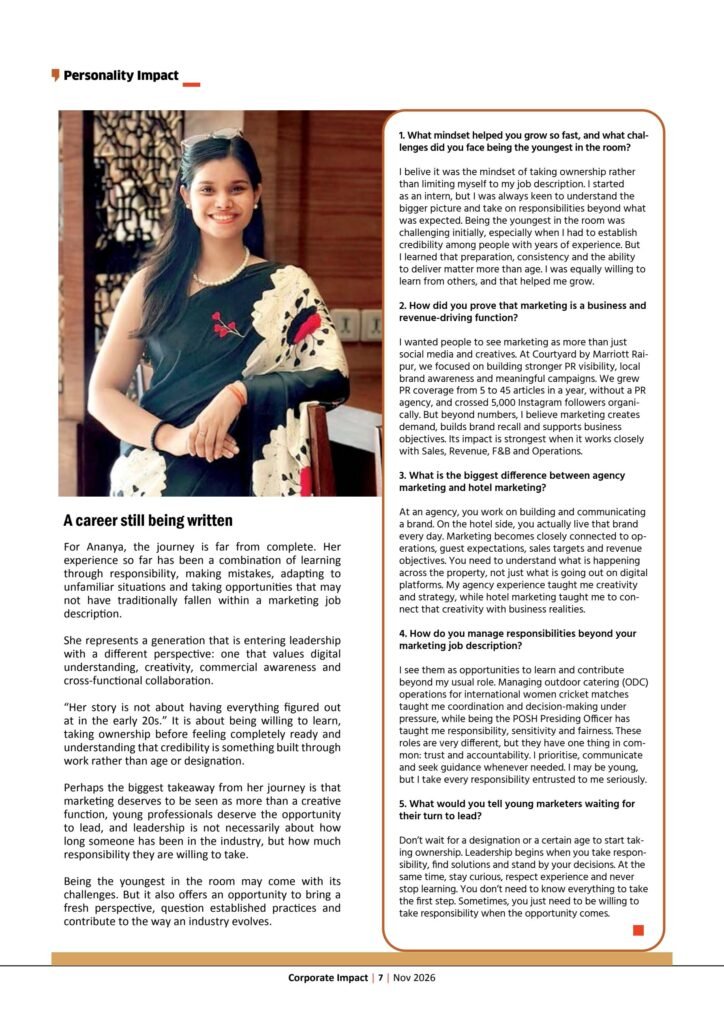
For Ananya, the journey is far from complete. Her experience so far has been a combination of learning through responsibility, making mistakes, adapting to unfamiliar situations and taking opportunities that may not have traditionally fallen within a marketing job description.
She represents a generation that is entering leadership with a different perspective: one that values digital understanding, creativity, commercial awareness and cross-functional collaboration.
“Her story is not about having everything figured out at in the early 20s.” It is about being willing to learn, taking ownership before feeling completely ready and understanding that credibility is something built through work rather than age or designation.
Perhaps the biggest takeaway from her journey is that marketing deserves to be seen as more than a creative function, young professionals deserve the opportunity to lead, and leadership is not necessarily about how long someone has been in the industry, but how much responsibility they are willing to take.
Being the youngest in the room may come with its challenges. But it also offers an opportunity to bring a fresh perspective, question established practices and contribute to the way an industry evolves.
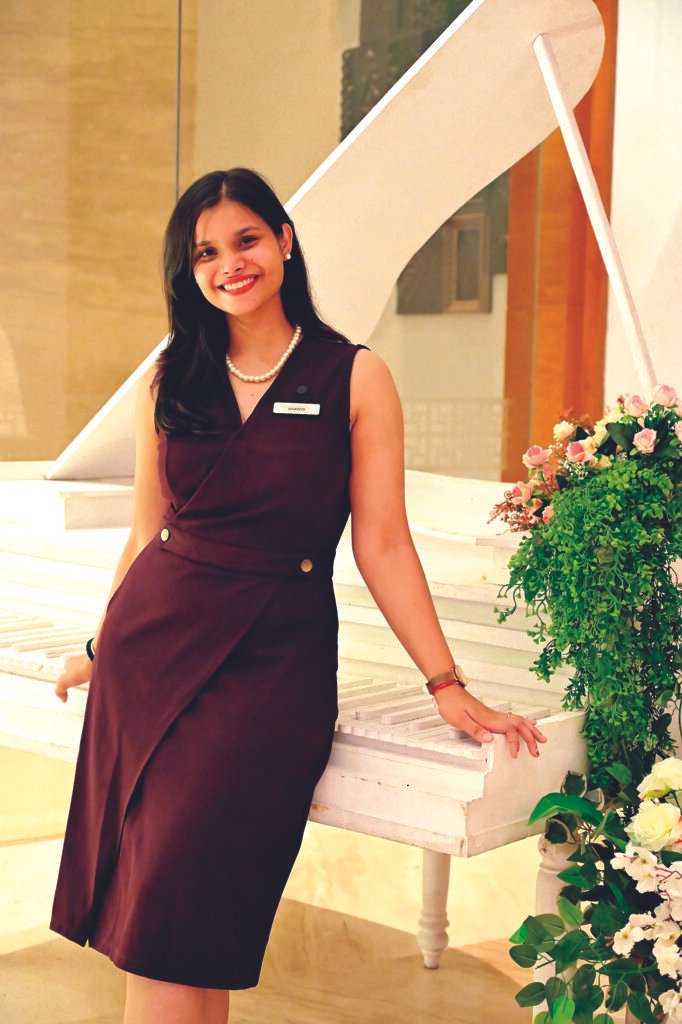
1. What mindset helped you grow so fast, and what challenges did you face being the youngest in the room?
I belive it was the mindset of taking ownership rather than limiting myself to my job description. I started as an intern, but I was always keen to understand the bigger picture and take on responsibilities beyond what was expected. Being the youngest in the room was challenging initially, especially when I had to establish credibility among people with years of experience. But I learned that preparation, consistency and the ability to deliver matter more than age. I was equally willing to learn from others, and that helped me grow.
2. How did you prove that marketing is a business and revenue-driving function?
I wanted people to see marketing as more than just social media and creatives. At Courtyard by Marriott Raipur, we focused on building stronger PR visibility, local brand awareness and meaningful campaigns. We grew PR coverage from 5 to 45 articles in a year, without a PR agency, and crossed 5,000 Instagram followers organically. But beyond numbers, I believe marketing creates demand, builds brand recall and supports business objectives. Its impact is strongest when it works closely with Sales, Revenue, F&B and Operations.
3. What is the biggest difference between agency marketing and hotel marketing?
At an agency, you work on building and communicating a brand. On the hotel side, you actually live that brand every day. Marketing becomes closely connected to operations, guest expectations, sales targets and revenue objectives. You need to understand what is happening across the property, not just what is going out on digital platforms. My agency experience taught me creativity and strategy, while hotel marketing taught me to connect that creativity with business realities.
4. How do you manage responsibilities beyond your marketing job description?
I see them as opportunities to learn and contribute beyond my usual role. Managing outdoor catering (ODC) operations for international women cricket matches taught me coordination and decision-making under pressure, while being the POSH Presiding Officer has taught me responsibility, sensitivity and fairness. These roles are very different, but they have one thing in common: trust and accountability. I prioritise, communicate and seek guidance whenever needed. I may be young, but I take every responsibility entrusted to me seriously.
5. What would you tell young marketers waiting for their turn to lead?
Don’t wait for a designation or a certain age to start taking ownership. Leadership begins when you take responsibility, find solutions and stand by your decisions. At the same time, stay curious, respect experience and never stop learning. You don’t need to know everything to take the first step.
Sometimes, you just need to be willing to take responsibility when the opportunity comes.