


Stress management strategies like meditation, yoga, deep breathing exercises and regular physical activity helps reduce symptoms of GERD.
Dr. Abhishek Jain
MD (Medicine), DM (Gastroenterology)
Fellowship Advanced GI Endoscopy
Consultant Gastroenterologist
NHMMI Hospital & Jai Gastro and Liver clinic, Raipur
Email – drabhishekjain18@gmail.com
Insta – your.gut.doctor
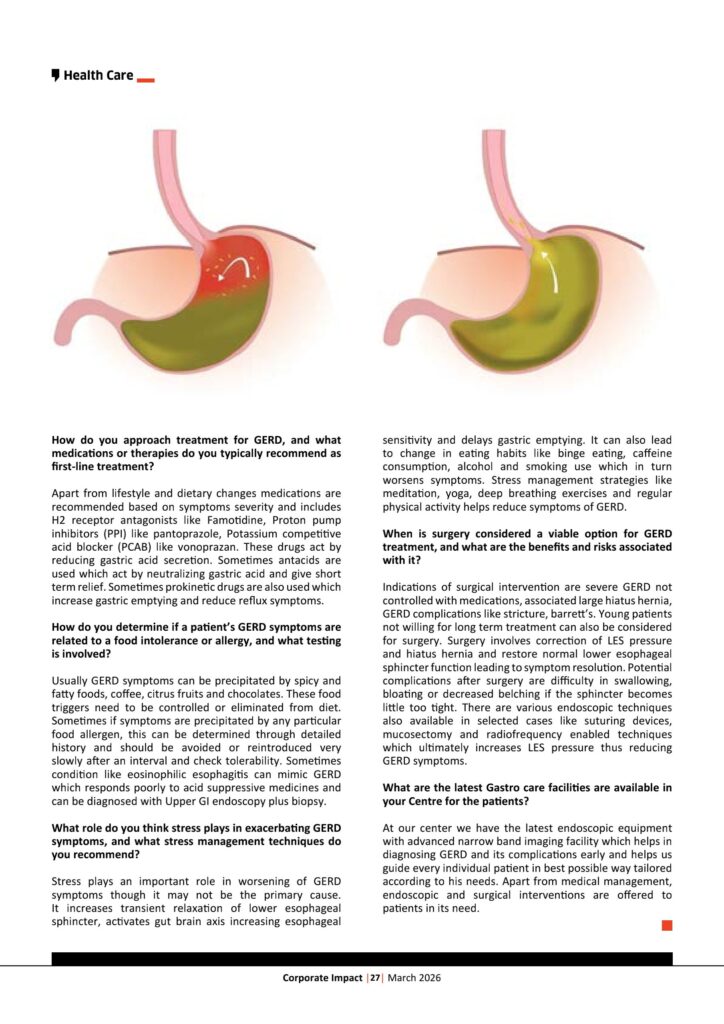
GERD (Gastroesophageal reflux disease) is a spectrum of disorder where stomach acid flows back into the food pipe producing symptoms of heart burn and regurgitation. It is quite common with prevalence of 6-30 % in Indian population in various studies.

What are the primary factors that contribute to the development of GERD, and how do they affect the lower esophageal sphincter?
Most important factor that contribute to GERD are weak or inappropriately relaxing LES that allows acidic content to move back into food pipe. Other important factor is obesity that increases intraabdominal pressure which in turn pushes acid upwards. Also certain foods like caffeine, chocolates, carbonated drinks, mint increases chances of GERD. Other factors like smoking, large fatty meals, underlying hiatus hernia and some drugs like pain killers, calcium channel blockers, nitrates relaxes LES and increase risk of GERD. All these factors makes LES weak or causes inappropriate LES relaxation which allows stomach acid, digestive juices and food content to flow back into the esophagus and cause symptoms of heartburn, reflux and chest discomfort. Decreasing incidence of Helicobacter pylori infection has also contributed to rising incidence of GERD. Also sometimes when stomach emptying after food intake is slow, GERD can worsen further.
How do you diagnose GERD, and what tests do you recommend to rule out other conditions with similar symptoms?
GERD can be diagnosed with patient symptoms like heart burn and reflux in most of the cases. When the disease is worsening or not responding to treatment or there are atypical symptoms like chronic cough, throat irritation, vomiting, dysphagia various tests may be needed for confirmation and asses severity of disease. Upper GI Endoscopy is done to asses food pipe, to look for any ulcers or hiatus hernia and complications like Barret’s esophagus, stricture. Sometimes Esophageal manometry is required to asses esophageal motility and Lower esophageal sphincter pressure and rule out other motility disorder. Also 24 hour PH metry is done in which a probe is placed in food pipe for 24 hours which allows to measure acid levels in it and also correlate with symptoms severity.
What lifestyle modifications do you suggest for patients with GERD to manage symptoms and prevent complications?
Life style changes are one of the mainstays in treatment of GERD. This includes small frequent meals instead of large ones, avoid food triggers like caffeine, chocolate, spicy fatty foods and carbonated drinks. Patients are advised not to lie down for 2-3 hours after having meals, maintain healthy weight, avoid smoking and head end elevation of bed by 6-8 inches.
Are there any specific dietary recommendations or restrictions you’d advise for patients with GERD, and how do you tailor them to individual needs?
Along with dietary recommendation, patients who are obese are advised to reduce weight through healthy dietary habits and regular aerobic exercises helps to improve symptoms of GERD. Also tobacco use and alcoholic drinks in any form is prohibited. Stress in any form worsens symptoms of GERD and its control may help improve its symptoms.
What are the potential complications of untreated GERD, and how can they be prevented or managed?
Potential complications of untreated GERD includes esophageal ulcers, peptic stricture (narrowing of lower food pipe), Barrett’s esophagus and esophageal cancer. To prevent these complications, lifestyle and dietary changes should be initiated early and medical attention should be sought with initiation of medications as required and regular follow up with doctor is recommended. Any worsening of current symptoms or new onset symptoms like blood vomiting, difficulty in swallowing food, loss of appetite and weight loss should not be ignored and should be treated immediately.
Can GERD lead to more severe conditions like Barrett’s esophagus or esophageal cancer, and what screening measures do you recommend?
GERD can progress to Barrett’s esophagus which itself is a premalignant condition which can later change into cancer. Changes of Barrett’s esophagus can be diagnosed with Upper GI Endoscopy with Narrow band imaging and biopsy. Patients with Barrett’s esophagus should be on regular surveillance endoscopy every 6 months to 5 years depending on presence or absence of any early malignant changes so that any development of cancerous changes could be picked up early and treated accordingly. GERD increases risk of esophageal cancers primarily by causing barrett’s esophagus especially if initial symptoms are ignored and should be treated accordingly.
How do you approach treatment for GERD, and what medications or therapies do you typically recommend as first-line treatment?
Apart from lifestyle and dietary changes medications are recommended based on symptoms severity and includes H2 receptor antagonists like Famotidine, Proton pump inhibitors (PPI) like pantoprazole, Potassium competitive acid blocker (PCAB) like vonoprazan. These drugs act by reducing gastric acid secretion. Sometimes antacids are used which act by neutralizing gastric acid and give short term relief. Sometimes prokinetic drugs are also used which increase gastric emptying and reduce reflux symptoms.
How do you determine if a patient’s GERD symptoms are related to a food intolerance or allergy, and what testing is involved?
Usually GERD symptoms can be precipitated by spicy and fatty foods, coffee, citrus fruits and chocolates. These food triggers need to be controlled or eliminated from diet. Sometimes if symptoms are precipitated by any particular food allergen, this can be determined through detailed history and should be avoided or reintroduced very slowly after an interval and check tolerability. Sometimes condition like eosinophilic esophagitis can mimic GERD which responds poorly to acid suppressive medicines and can be diagnosed with Upper GI endoscopy plus biopsy.

What role do you think stress plays in exacerbating GERD symptoms, and what stress management techniques do you recommend?
Stress plays an important role in worsening of GERD symptoms though it may not be the primary cause. It increases transient relaxation of lower esophageal sphincter, activates gut brain axis increasing esophageal sensitivity and delays gastric emptying. It can also lead to change in eating habits like binge eating, caffeine consumption, alcohol and smoking use which in turn worsens symptoms. Stress management strategies like meditation, yoga, deep breathing exercises and regular physical activity helps reduce symptoms of GERD.
When is surgery considered a viable option for GERD treatment, and what are the benefits and risks associated with it?
Indications of surgical intervention are severe GERD not controlled with medications, associated large hiatus hernia, GERD complications like stricture, barrett’s. Young patients not willing for long term treatment can also be considered for surgery. Surgery involves correction of LES pressure and hiatus hernia and restore normal lower esophageal sphincter function leading to symptom resolution. Potential complications after surgery are difficulty in swallowing, bloating or decreased belching if the sphincter becomes little too tight. There are various endoscopic techniques also available in selected cases like suturing devices, mucosectomy and radiofrequency enabled techniques which ultimately increases LES pressure thus reducing GERD symptoms.
What are the latest Gastro care facilities are available in your Centre for the patients?
At our center we have the latest endoscopic equipment with advanced narrow band imaging facility which helps in diagnosing GERD and its complications early and helps us guide every individual patient in best possible way tailored according to his needs. Apart from medical management, endoscopic and surgical interventions are offered to patients in its need.