



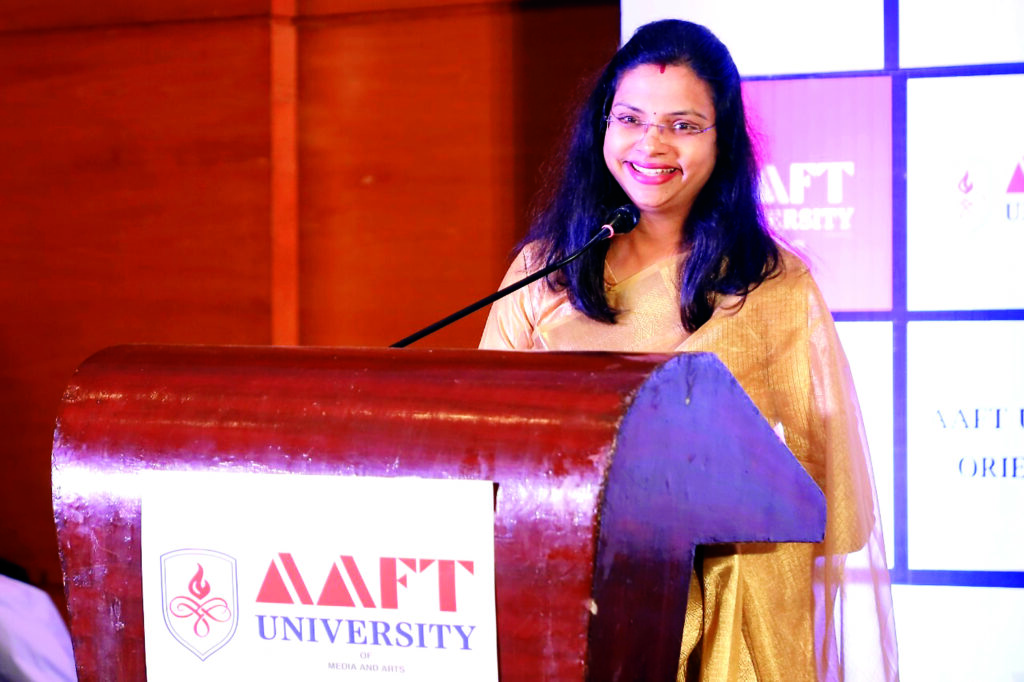
Prof. (Dr.) Shikha Verma Kashyap on Transforming Higher Education at AAFT University

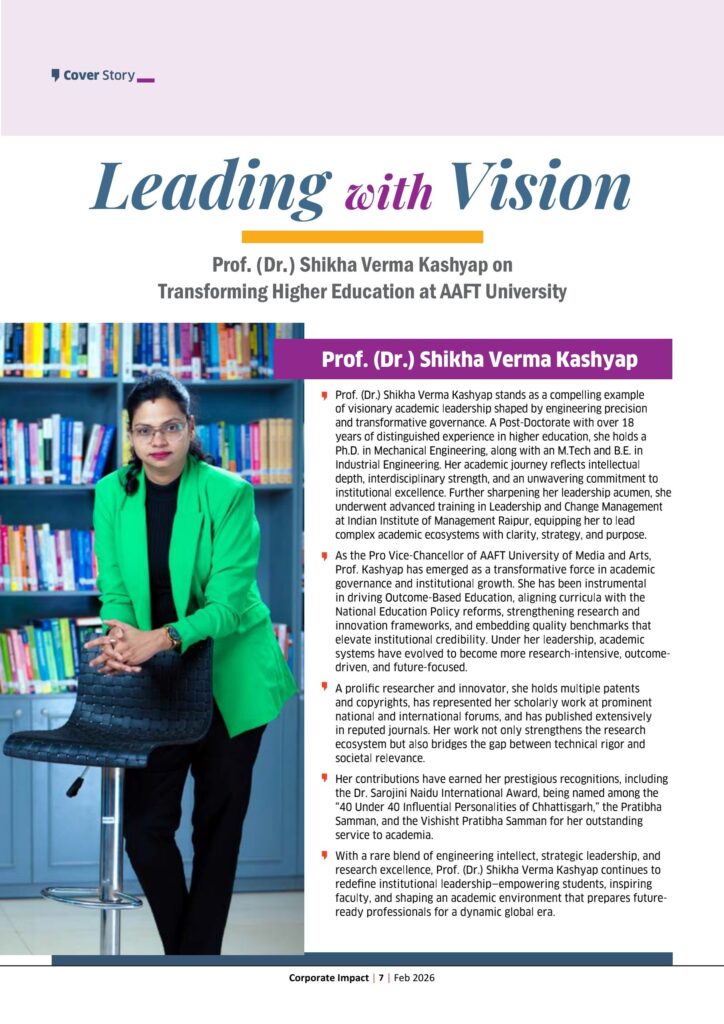
Prof. (Dr.) Shikha Verma Kashyap stands as a compelling example of visionary academic leadership shaped by engineering precision and transformative governance. A Post-Doctorate with over 18 years of distinguished experience in higher education, she holds a Ph.D. in Mechanical Engineering, along with an M.Tech and B.E. in Industrial Engineering. Her academic journey reflects intellectual depth, interdisciplinary strength, and an unwavering commitment to institutional excellence. Further sharpening her leadership acumen, she underwent advanced training in Leadership and Change Management at Indian Institute of Management Raipur, equipping her to lead complex academic ecosystems with clarity, strategy, and purpose.
As the Pro Vice-Chancellor of AAFT University of Media and Arts, Prof. Kashyap has emerged as a transformative force in academic governance and institutional growth. She has been instrumental in driving Outcome-Based Education, aligning curricula with the National Education Policy reforms, strengthening research and innovation frameworks, and embedding quality benchmarks that elevate institutional credibility. Under her leadership, academic systems have evolved to become more research-intensive, outcome-driven, and future-focused.
A prolific researcher and innovator, she holds multiple patents and copyrights, has represented her scholarly work at prominent national and international forums, and has published extensively in reputed journals. Her work not only strengthens the research ecosystem but also bridges the gap between technical rigor and societal relevance.
Her contributions have earned her prestigious recognitions, including the Dr. Sarojini Naidu International Award, being named among the “40 Under 40 Influential Personalities of Chhattisgarh,” the Pratibha Samman, and the Vishisht Pratibha Samman for her outstanding service to academia.
With a rare blend of engineering intellect, strategic leadership, and research excellence, Prof. (Dr.) Shikha Verma Kashyap continues to redefine institutional leadership—empowering students, inspiring faculty, and shaping an academic environment that prepares future-ready professionals for a dynamic global era.
As Pro Vice-Chancellor of AAFT University Chhattisgarh, what strategies have you implemented to enhance academic excellence and research output?
At AAFT University, academic excellence is pursued through a well-defined, system-driven approach that balances rigor with sustainability. Our strategy has been anchored in strengthening academic governance, implementing outcome-based education aligned with national frameworks, and ensuring continuous quality enhancement across teaching, research, and evaluation processes.

A strong emphasis has been placed on faculty capacity building through structured FDPs, leadership development initiatives, and research mentoring. Research has been embedded into the academic ecosystem through clearly articulated policies, interdisciplinary platforms, internal funding mechanisms, and robust monitoring systems. Equal importance is given to ethical research practices, innovation, and the integration of research outcomes into classroom teaching, ensuring that academic growth translates into meaningful student learning and societal contribution.
How do you balance academic leadership with research and innovation, and what initiatives have you taken to promote research among faculty and students?
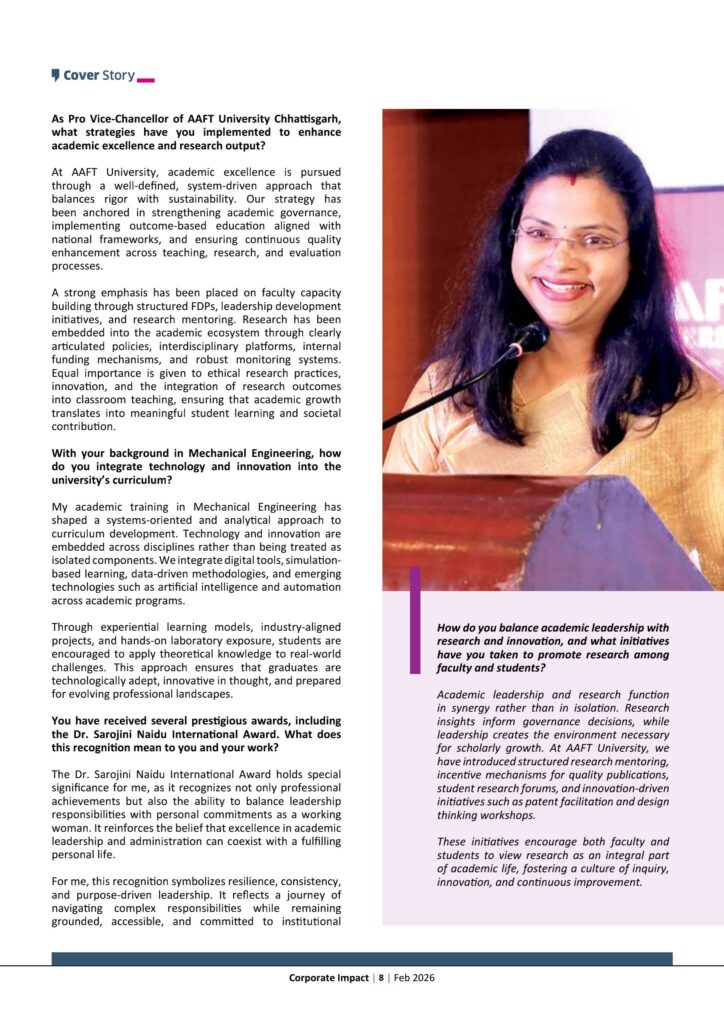
Academic leadership and research function in synergy rather than in isolation. Research insights inform governance decisions, while leadership creates the environment necessary for scholarly growth. At AAFT University, we have introduced structured research mentoring, incentive mechanisms for quality publications, student research forums, and innovation-driven initiatives such as patent facilitation and design thinking workshops.

These initiatives encourage both faculty and students to view research as an integral part of academic life, fostering a culture of inquiry, innovation, and continuous improvement.
With your background in Mechanical Engineering, how do you integrate technology and innovation into the university’s curriculum?
My academic training in Mechanical Engineering has shaped a systems-oriented and analytical approach to curriculum development. Technology and innovation are embedded across disciplines rather than being treated as isolated components. We integrate digital tools, simulation-based learning, data-driven methodologies, and emerging technologies such as artificial intelligence and automation across academic programs.
Through experiential learning models, industry-aligned projects, and hands-on laboratory exposure, students are encouraged to apply theoretical knowledge to real-world challenges. This approach ensures that graduates are technologically adept, innovative in thought, and prepared for evolving professional landscapes.
You have received several prestigious awards, including the Dr. Sarojini Naidu International Award. What does this recognition mean to you and your work?
The Dr. Sarojini Naidu International Award holds special significance for me, as it recognizes not only professional achievements but also the ability to balance leadership responsibilities with personal commitments as a working woman. It reinforces the belief that excellence in academic leadership and administration can coexist with a fulfilling personal life.
For me, this recognition symbolizes resilience, consistency, and purpose-driven leadership. It reflects a journey of navigating complex responsibilities while remaining grounded, accessible, and committed to institutional growth. More importantly, it serves as an encouragement to aspiring women leaders to pursue their ambitions with confidence and clarity.
AAFT University has seen growth under your leadership. What are some key achievements you are particularly proud of?
The university’s growth has been holistic and impact-driven. One of our key achievements is the establishment of a strong intellectual property ecosystem, with nearly 80 copyrights and patents filed and granted. This is complemented by a consistent rise in research publications and the successful organization of multiple international conferences, enhancing our academic visibility globally.
We have also developed more than 60 active MoUs with national and international academic and industry partners, enabling meaningful collaboration and exposure. Most importantly, our students continue to bring accolades to the university through academic excellence, creative achievements, and research recognition, which remains the most meaningful indicator of institutional success.

How do you approach outcome-based curriculum design, and what benefits has it brought to the university’s students and programs?
Outcome-based education at AAFT University is implemented through a carefully synchronized academic framework. Course objectives are systematically framed, program outcomes are clearly articulated, and learning outcomes are mapped in alignment with national and global benchmarks.
Teaching strategies, assessment tools, and evaluation mechanisms are planned cohesively to ensure effective attainment. Student attainments are continuously measured through structured evaluations, allowing timely academic interventions. This integrated approach has resulted in improved learning outcomes, higher attainment levels, enhanced skill development, and greater learner confidence across programs.
As someone trained in Leadership and Change Management at IIM Raipur, what leadership principles guide your approach to academic governance?
My leadership philosophy is grounded in transparency, empowerment, and adaptability. Change in academic institutions must be inclusive, well-communicated, and thoughtfully executed. I believe in decentralizing responsibility, nurturing leadership at all levels, and making data-driven decisions while preserving academic values.
Continuous feedback, accountability, and collaborative decision-making form the foundation of sustainable academic governance.
You have been recognized among the “40 Under 40 Influential Personalities of Chhattisgarh.” How does this influence your vision for education and leadership?
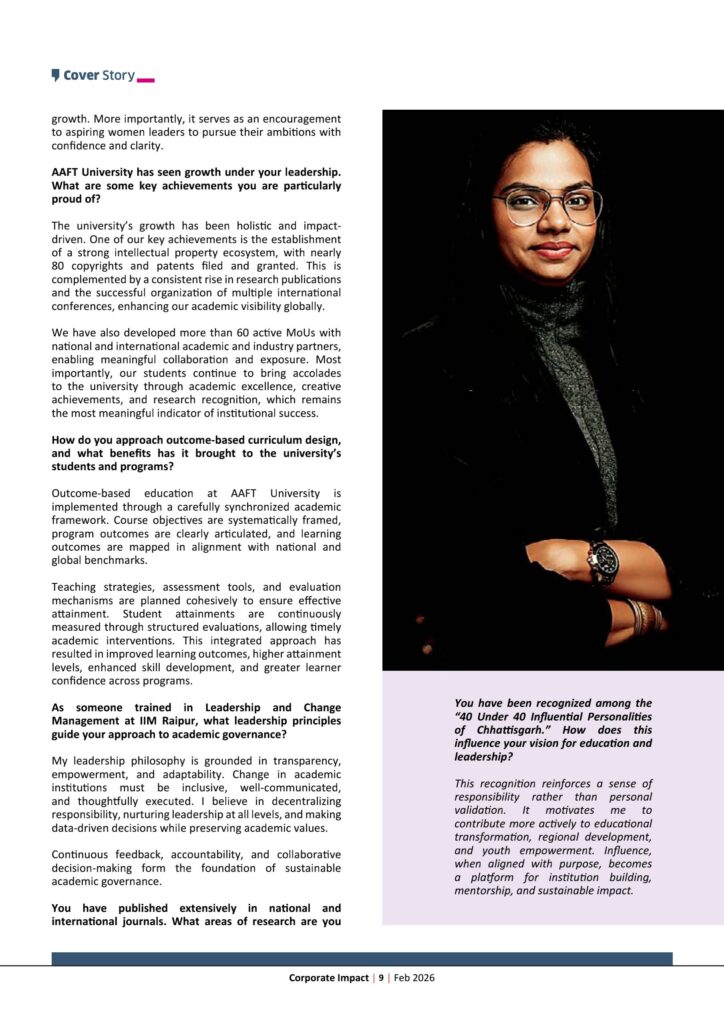
This recognition reinforces a sense of responsibility rather than personal validation. It motivates me to contribute more actively to educational transformation, regional development, and youth empowerment. Influence, when aligned with purpose, becomes a platform for institution building, mentorship, and sustainable impact.
How do you see the role of universities evolving in shaping future-ready careers, and how is AAFT University preparing students for this?
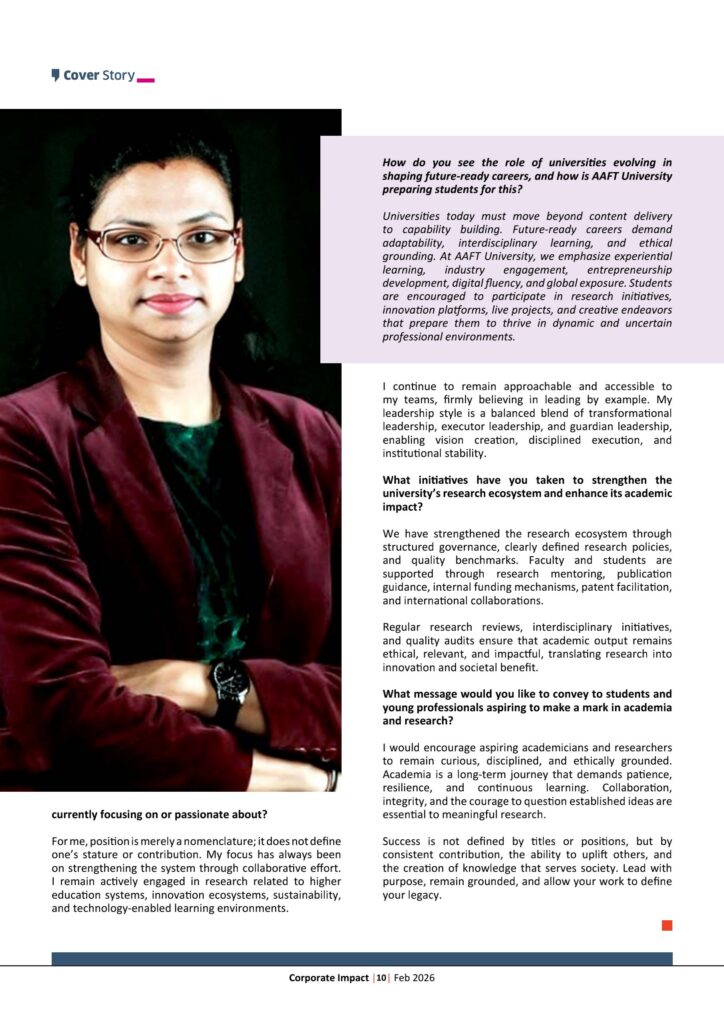
Universities today must move beyond content delivery to capability building. Future-ready careers demand adaptability, interdisciplinary learning, and ethical grounding. At AAFT University, we emphasize experiential learning, industry engagement, entrepreneurship development, digital fluency, and global exposure. Students are encouraged to participate in research initiatives, innovation platforms, live projects, and creative endeavors that prepare them to thrive in dynamic and uncertain professional environments.
You have published extensively in national and international journals. What areas of research are you currently focusing on or passionate about?
For me, position is merely a nomenclature; it does not define one’s stature or contribution. My focus has always been on strengthening the system through collaborative effort. I remain actively engaged in research related to higher education systems, innovation ecosystems, sustainability, and technology-enabled learning environments.
I continue to remain approachable and accessible to my teams, firmly believing in leading by example. My leadership style is a balanced blend of transformational leadership, executor leadership, and guardian leadership, enabling vision creation, disciplined execution, and institutional stability.
What initiatives have you taken to strengthen the university’s research ecosystem and enhance its academic impact?
We have strengthened the research ecosystem through structured governance, clearly defined research policies, and quality benchmarks. Faculty and students are supported through research mentoring, publication guidance, internal funding mechanisms, patent facilitation, and international collaborations.
Regular research reviews, interdisciplinary initiatives, and quality audits ensure that academic output remains ethical, relevant, and impactful, translating research into innovation and societal benefit.
What message would you like to convey to students and young professionals aspiring to make a mark in academia and research?
I would encourage aspiring academicians and researchers to remain curious, disciplined, and ethically grounded. Academia is a long-term journey that demands patience, resilience, and continuous learning. Collaboration, integrity, and the courage to question established ideas are essential to meaningful research.
Success is not defined by titles or positions, but by consistent contribution, the ability to uplift others, and the creation of knowledge that serves society. Lead with purpose, remain grounded, and allow your work to define your legacy.