


PCOS is rising today due to lifestyle changes, stress, poor diet, and environmental factors.
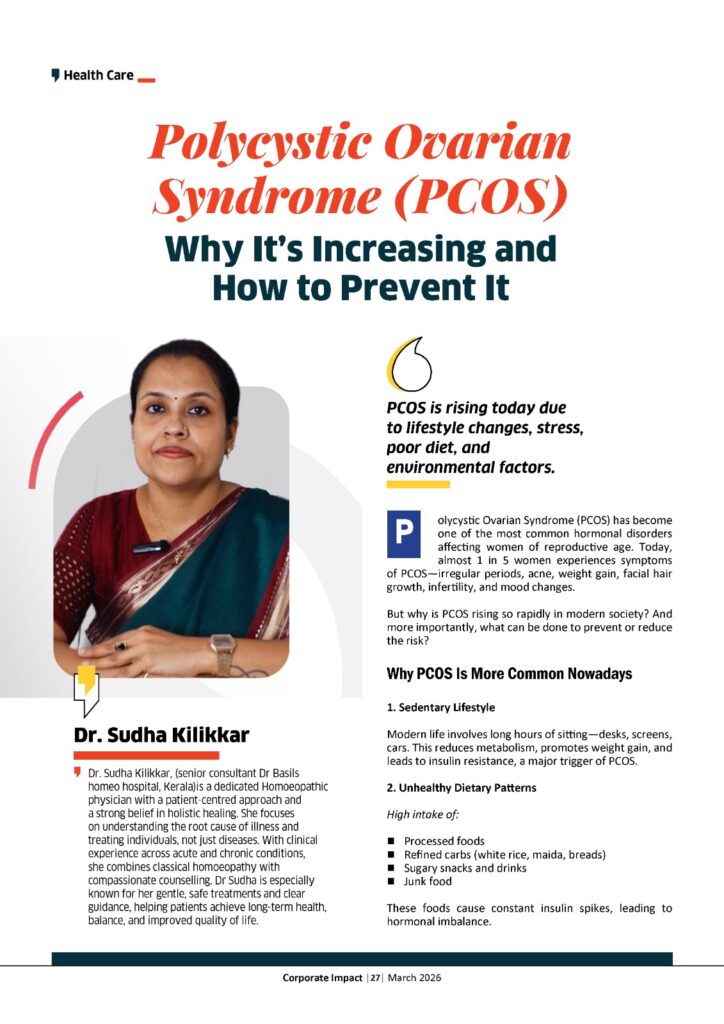
Dr. Sudha Kilikkar
Dr. Sudha Kilikkar, (senior consultant Dr Basils homeo hospital, Kerala)is a dedicated Homoeopathic physician with a patient-centred approach and a strong belief in holistic healing. She focuses on understanding the root cause of illness and treating individuals, not just diseases. With clinical experience across acute and chronic conditions, she combines classical homoeopathy with compassionate counselling. Dr Sudha is especially known for her gentle, safe treatments and clear guidance, helping patients achieve long-term health, balance, and improved quality of life.
Polycystic Ovarian Syndrome (PCOS) has become one of the most common hormonal disorders affecting women of reproductive age. Today, almost 1 in 5 women experiences symptoms of PCOS—irregular periods, acne, weight gain, facial hair growth, infertility, and mood changes.
But why is PCOS rising so rapidly in modern society? And more importantly, what can be done to prevent or reduce the risk?
Why PCOS Is More Common Nowadays
1. Sedentary Lifestyle
Modern life involves long hours of sitting—desks, screens, cars. This reduces metabolism, promotes weight gain, and leads to insulin resistance, a major trigger of PCOS.
2. Unhealthy Dietary Patterns
High intake of:
Processed foods
Refined carbs (white rice, maida, breads)
Sugary snacks and drinks
Junk food
These foods cause constant insulin spikes, leading to hormonal imbalance.
3. Increased Stress Levels
Chronic stress raises cortisol, which disturbs reproductive hormones, reduces ovulation, and worsens PCOS symptoms.
4. Environmental Hormone Disruptors
Exposure to endocrine-disrupting chemicals (EDCs) like plastics (BPA), pesticides, cosmetics, artificial fragrances, and packaged food linings can disturb hormonal regulation.
5. Poor Sleep and Irregular Daily Routine
Late nights, irregular sleep patterns, and shift-work lifestyles disrupt the circadian rhythm, affecting hormone production.
6. Early Puberty and Changing Lifestyle in Adolescents
Earlier onset of menstruation, unhealthy snacking, reduced outdoor activities, and obesity in children are major contributors.
7. Better Awareness and Diagnosis
More women are being screened, leading to higher reported numbers—though the actual prevalence is also genuinely increasing.
Preventive Measures to Reduce the Risk of PCOS
1. Maintain a Healthy Weight
Even 5–10% weight loss improves insulin sensitivity and restores periods.
Focus on:
Regular physical activity
Balanced nutrition
High-fiber foods
2. Follow a Balanced, Low-GI Diet
Prefer:
Whole grains
Millets
Fresh fruits
Green leafy vegetables
Nuts & seeds
Lean proteins
Avoid:
Sugary drinks
Junk food
Refined flour
Deep-fried snacks
3. Regular Exercise (Minimum 30–45 mins daily)
The most effective activities include:
Brisk walking
Yoga
Strength training
Cycling
Swimming
Exercise enhances insulin utilization and balances hormones.
4. Stress Management
Incorporate:
Yoga or pranayama
Meditation
Deep breathing exercises
Adequate leisure time
Healthy work–life balance
5. Improve Sleep Hygiene
Aim for 7–8 hours of sleep daily. Avoid:
Late-night screen use
Caffeine in late evenings
Good sleep supports reproductive hormone balance.
6. Reduce Exposure to Hormone-Disrupting Chemicals
Use glass or steel containers instead of plastic
Choose organic produce when possible
Avoid excessive cosmetics or scented products
Limit use of pesticides at home.
7. Early Screening and Timely Medical Advice
Women with symptoms like:
Irregular periods
Weight gain
Excess hair growth
Acne
Fertility issues
should get evaluated early to prevent complications.
Conclusion
PCOS is rising today due to lifestyle changes, stress, poor diet, and environmental factors. While genetics play a role, much of PCOS can be prevented or controlled with healthy habits. A disciplined lifestyle, mindful eating, physical activity, and stress reduction can greatly reduce the risk and improve overall well-being.