



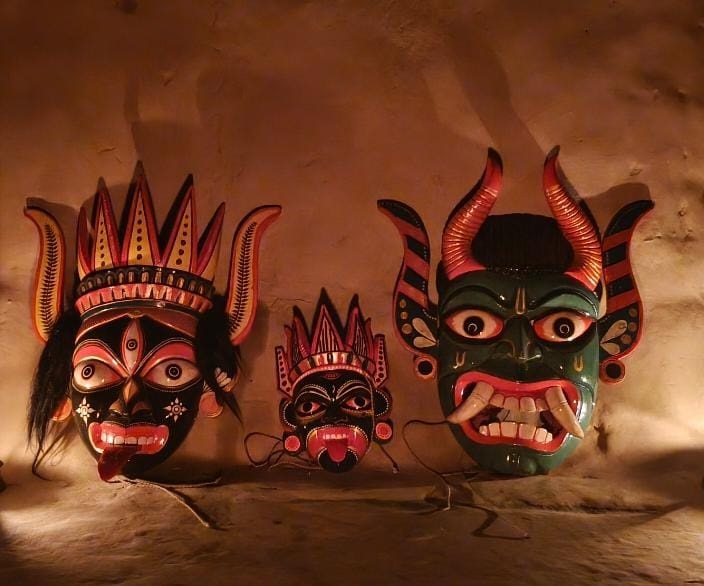
Malda is waiting, for the traditional mask of Gamira, the famous Kushmandi of North and South Dinajpur. The fame of Kushmandi revolves around the mask. Gamira is a very ancient traditional folk dance of Dinajpur.
Madhushree Hatial
Madhushree Hatial is a prominent figure in the preservation and promotion of indigenous tribal art, culture, and literature in India, particularly in the West Bengal and Jharkhand regions.
Early Life and Influences: Madhushree Hatial’s passion for traditional art forms was deeply influenced by her upbringing in Jhargram. Her father, Sri Suniti Kumar Hatial, a renowned teacher, dedicated himself to tribal arts and music. He instilled in her a love for tribal heritage and encouraged her to dream big, even in the absence of modern technology. Her childhood, spent amidst indigenous and folk populations, ingrained in her the originality and simplicity of tribal nature and traditions.
Career and Contributions: Madhushree Hatial is a social reformer cum educator and a national award recipient in Jhumur (folk song). Her commitment to preserving and documenting “Tribal Arts & Culture” for future generations is evident in her extensive work. Her efforts extend to reviving the near-extinct tribal art form of Sohrai, teaching it to women and youth in bordering areas of Jharkhand and Bengal. She also educates primary school children about ancient folklores through storytelling and a “Bhramyaman Pathagar” (mobile library) initiative, which was specially recognized by Jagdeep Dhankhar, the former Governor of West Bengal and current Vice President of India.
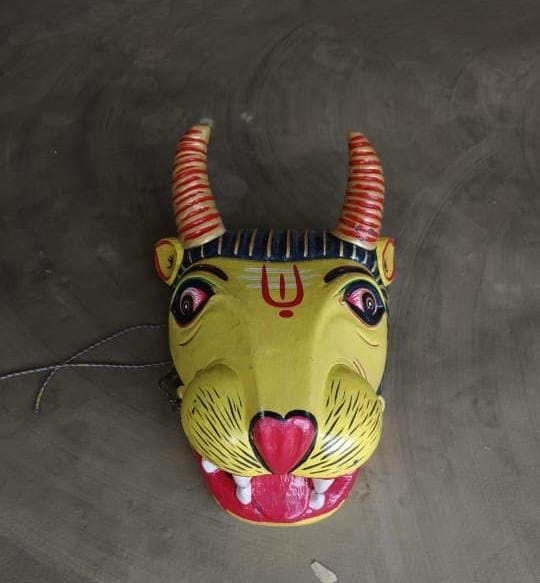
It is believed that the Gambhira festival originated around the worship of Shiva. One of the names of Shiva is ‘Gambhir’, so the festival of Shiva is Gambhira Utsav and the song of worship of Shiva is Gambhira Gaan; however, in ancient times it is believed that it was a festival of Surya Dev. In Malda, mainly on the occasion of the Shiva Puja of Chaitra Sankranti, the main events of the previous year are criticized through dance, song and acting in the Gambhira Mandap; at different stages of the program, the Gambhira mask dance of Chota Tamasha, Baro Tamasha and Phulbhanga ceremony is performed. Gambhira dance is considered to be much older than Gambhira Gaan.
It is said that the almost thousand-year-old Gambhira festival and its continuity have influenced the life of Malda district. In the Malda region of West Bengal, the Gajan festival of Chaitra Sankranti is known as Gambhira Puja and festival (in Jalpaiguri of North Bengal it is known as Gambhira). The main event is held on the last four days of Chaitra, but depending on the region, Shiva idols are also installed in the months of Baishakh, Jyishta and even Shravan and Gambhira Puja is performed. Although it is mainly known as Shiva Puja today, it is believed to have been a festival of the sun in ancient times.
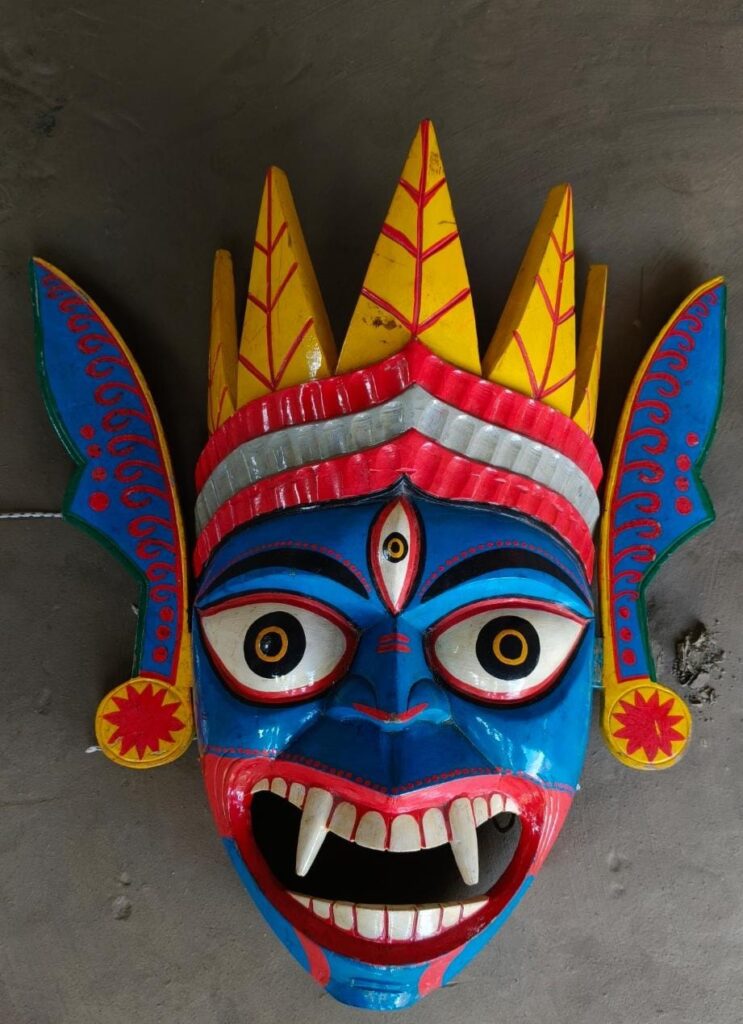
There is a difference of opinion about the origin of both the words Gambhira or Gambhira. Many believe that this type of mask was made from Gama wood, hence it is called Gambhira. Others believe that the word Gambhira originates from Gambhir, which is based on Gambhir (Shiva) himself. Earlier, this type of mask-dance was organized for seven days, but now it has reduced to four days. In Malda district, Gambhira dance is celebrated through folk dances such as Ghatbhora (establishment of Ghat), Bolbai dance (a song sung by four people to Shiva, also known as Gambhira song), Kantaphora, Dhenkichobano, etc.

Gambhira is an ancient folk dance contemporary with the Pala era of 1200-1500 centuries. It is also mentioned in the diary of the Chinese traveler Hiuen Tsang. Today, Gambhira folk dance is seen in various places in Malda district including English Bazaar, Chanchal, Bamangola, Bachamari, Aiho, Bhutni, Habibpur, Gajol, Madhughat. Similarly, in Dinajpur, this type of folk dance is called Gambhira dance. Both folk dances are mask-related. Most of the masks used in Gambhira dance were made of wood.
However, Malda is waiting, for the traditional mask of Gamira, the famous Kushmandi of North and South Dinajpur. The fame of Kushmandi revolves around the mask. Gamira is a very ancient traditional folk dance of Dinajpur. Through this dance, the villagers try to please the gods by invoking good energy and destroying evil energy. Mahishbathan village of Kushmandi block, locally known as Mukhosh-gram, has gained fame for making masks. In 2018, the wooden mask of Kushmandi got the Geographical Indications or GI tag. However, this tradition of living around masks is not very old here. Until the nineties of the last century, it was largely unorganized. Maintaining the tradition of their ancestors, the artists here used to make masks of mythological characters like demons, Hanuman, Chamunda, etc., along with tea trays, incense burners, pen stands, etc. from Gamari wood or bamboo, but due to lack of a market, there was no regular opportunity to sell them. By 1990, efforts were made to bring mask artists together under the initiative of Mahishbathan Rural Handicrafts Association. This association started its journey after being officially registered in 1995, and its members now exceed 200. Masks made of wood like Gamari, shawl, mango, pakura, mahogany, etc. are widely used in Gamira dance. Gamira artists believe that these are not just masks, but are actually ‘faces’ or ‘mukhs’. As soon as the masks are worn, the face comes alive, according to the artists’ belief of the present era.