


A Spiritual Counsellor’s Perspective on Stress, Meditation, and Emotional Well-being
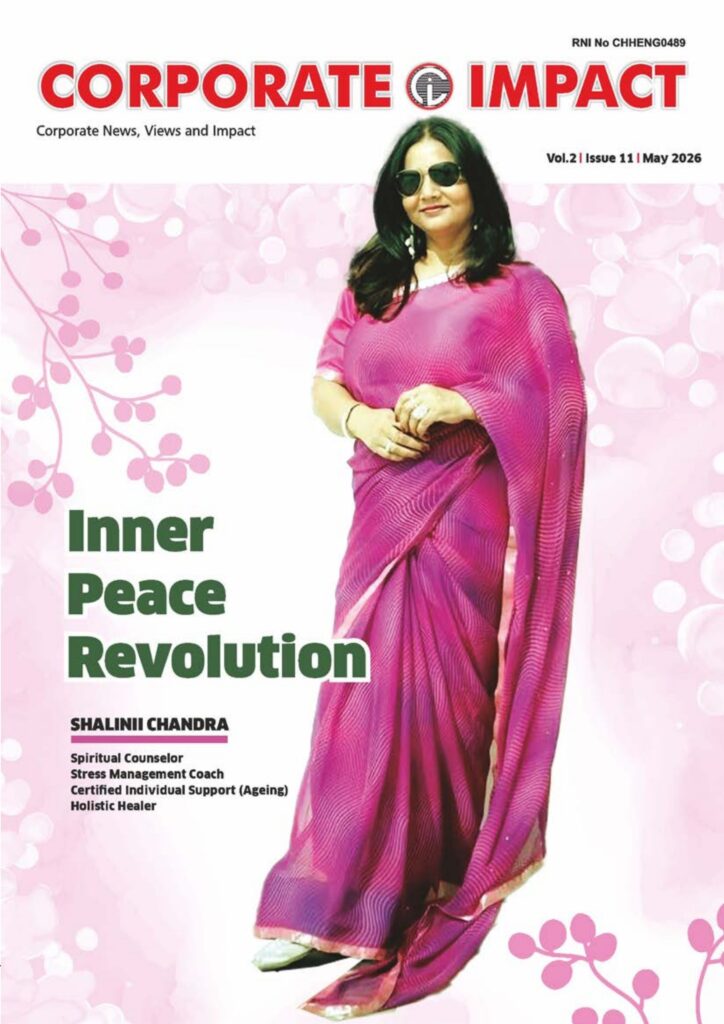
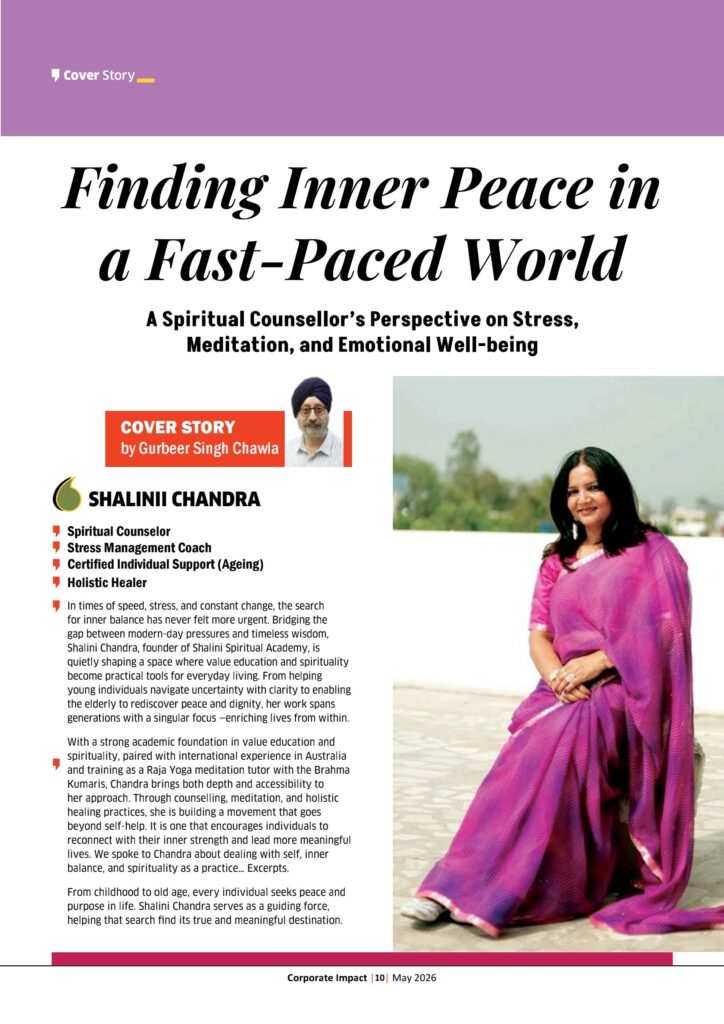
SHALINII CHANDRA
Spiritual Counselor
Stress Management Coach
Certified Individual Support (Ageing)
Holistic Healer

In times of speed, stress, and constant change, the search for inner balance has never felt more urgent. Bridging the gap between modern-day pressures and timeless wisdom, Shalini Chandra, founder of Shalini Spiritual Academy, is quietly shaping a space where value education and spirituality become practical tools for everyday living. From helping young individuals navigate uncertainty with clarity to enabling the elderly to rediscover peace and dignity, her work spans generations with a singular focus —enriching lives from within.
With a strong academic foundation in value education and spirituality, paired with international experience in Australia and training as a Raja Yoga meditation tutor with the Brahma Kumaris, Chandra brings both depth and accessibility to her approach. Through counselling, meditation, and holistic healing practices, she is building a movement that goes beyond self-help. It is one that encourages individuals to reconnect with their inner strength and lead more meaningful lives. We spoke to Chandra about dealing with self, inner balance, and spirituality as a practice… Excerpts.
From childhood to old age, every individual seeks peace and purpose in life. Shalini Chandra serves as a guiding force, helping that search find its true and meaningful destination.

What’s your approach to helping clients manage stress and find inner peace?
My approach begins with helping individuals slow down and reconnect with themselves. Many people experience stress because their thoughts are constantly moving between the past and the future. I guide clients to gently bring their awareness to the present moment through simple breathing awareness and reflective thinking. Raja Yoga meditation is very helpful because it allows a person to observe their thoughts rather than be controlled by them. I also encourage clients to understand the root of their stress instead of only trying to suppress it. When people become aware of their inner dialogue, they begin to transform it. We work on cultivating peaceful thoughts, gratitude, and self-respect. Over time, these practices create emotional stability and clarity. Inner peace is not something external that we acquire; it is already within us. My role is simply to help individuals rediscover that peaceful state and learn how to access it consistently in their daily lives.
How do you incorporate Raja Yoga Meditation into your counselling sessions?
Raja Yoga meditation is integrated in a very practical and accessible way during my counselling sessions. I usually begin by introducing the concept that we are not just the body or the mind, but conscious beings capable of directing our thoughts. Once clients understand this idea, I guide them through short meditation practices where they learn to observe their thoughts without judgment. These moments of silence help people step away from emotional turbulence and see situations more clearly. I also share simple affirmations that align with Raja Yoga principles, such as peace, self-respect, and inner strength. Clients are encouraged to practice these thoughts during meditation and also during everyday activities. Over time, meditation becomes less of a separate practice and more of a way of living. The aim is not only relaxation but transformation of thinking patterns. When people learn to create elevated thoughts consciously, their emotional resilience and decision-making naturally improve.
Can you share a memorable experience where you’ve seen a significant transformation in a client’s life?
While living in Australia for three years, my neighbour brought her 27-year-old daughter-in-law, a mother of a three-year-old, who was emotionally distressed after repeatedly reading alarming online information about her diagnosed endometriosis. Doctors had recommended surgery, which increased her anxiety, making her irritable, withdrawn, and often frustrated even with her child. I listened patiently and focused on her underlying stress and thought patterns rather than only the illness. Through reflective conversations and Sandwich Therapy across three sessions per week for nearly two months, her mindset gradually improved—she became calmer, more positive, emotionally stronger, and her relationship with her child improved. She later said that simply being heard with patience and kindness relieved half of her pain, reminding me that healing often begins with compassionate listening.
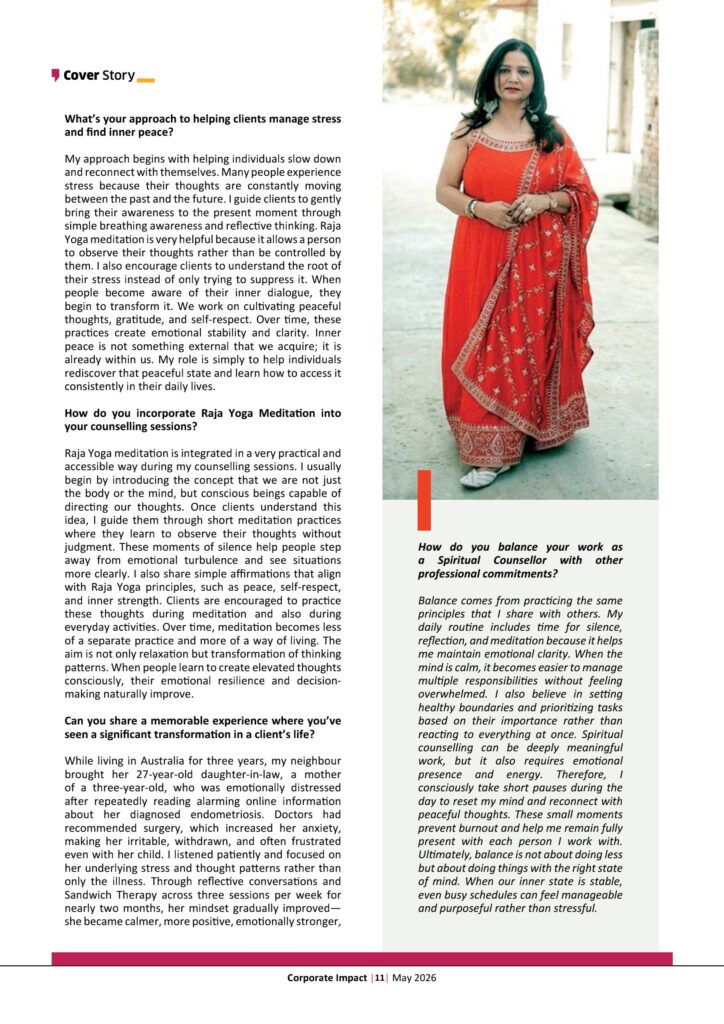
How do you balance your work as a Spiritual Counsellor with other professional commitments?
Balance comes from practicing the same principles that I share with others. My daily routine includes time for silence, reflection, and meditation because it helps me maintain emotional clarity. When the mind is calm, it becomes easier to manage multiple responsibilities without feeling overwhelmed. I also believe in setting healthy boundaries and prioritizing tasks based on their importance rather than reacting to everything at once. Spiritual counselling can be deeply meaningful work, but it also requires emotional presence and energy. Therefore, I consciously take short pauses during the day to reset my mind and reconnect with peaceful thoughts. These small moments prevent burnout and help me remain fully present with each person I work with. Ultimately, balance is not about doing less but about doing things with the right state of mind. When our inner state is stable, even busy schedules can feel manageable and purposeful rather than stressful.
How do you tailor your guidance to suit individuals with different spiritual backgrounds?
Every individual comes with a unique belief system, cultural background, and personal understanding of spirituality. My role is not to impose a particular philosophy but to support each person in discovering what resonates with them. While Raja Yoga provides the framework I personally practice, its core principles—such as self-awareness, positive thinking, and inner peace—are universal. When working with clients, I focus on these universal values rather than religious labels. I spend time listening carefully to their perspectives and experiences before offering guidance. If someone follows a specific faith tradition, I often connect meditation concepts with ideas already present in their belief system. This makes the practice feel familiar rather than foreign. The essence of spirituality is self-connection and awareness, which transcends any single tradition. When people feel respected and understood, they become more open to exploring meditation and emotional healing in a way that feels authentic to them.
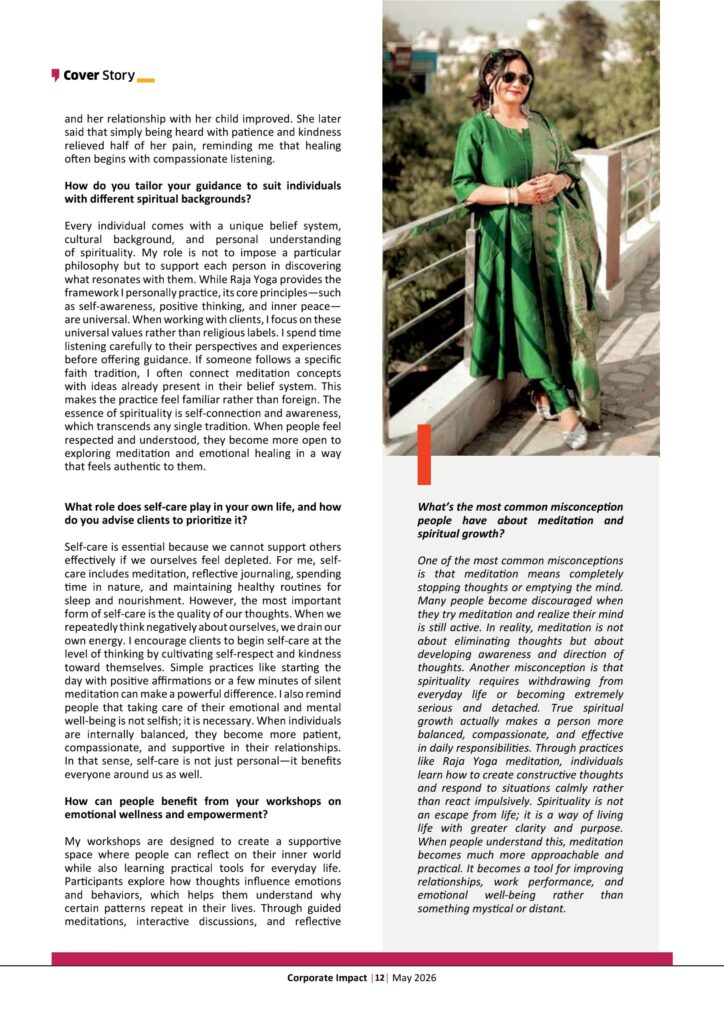
What’s the most common misconception people have about meditation and spiritual growth?
One of the most common misconceptions is that meditation means completely stopping thoughts or emptying the mind. Many people become discouraged when they try meditation and realize their mind is still active. In reality, meditation is not about eliminating thoughts but about developing awareness and direction of thoughts. Another misconception is that spirituality requires withdrawing from everyday life or becoming extremely serious and detached. True spiritual growth actually makes a person more balanced, compassionate, and effective in daily responsibilities. Through practices like Raja Yoga meditation, individuals learn how to create constructive thoughts and respond to situations calmly rather than react impulsively. Spirituality is not an escape from life; it is a way of living life with greater clarity and purpose. When people understand this, meditation becomes much more approachable and practical. It becomes a tool for improving relationships, work performance, and emotional well-being rather than something mystical or distant.
What role does self-care play in your own life, and how do you advise clients to prioritize it?
Self-care is essential because we cannot support others effectively if we ourselves feel depleted. For me, self-care includes meditation, reflective journaling, spending time in nature, and maintaining healthy routines for sleep and nourishment. However, the most important form of self-care is the quality of our thoughts. When we repeatedly think negatively about ourselves, we drain our own energy. I encourage clients to begin self-care at the level of thinking by cultivating self-respect and kindness toward themselves. Simple practices like starting the day with positive affirmations or a few minutes of silent meditation can make a powerful difference. I also remind people that taking care of their emotional and mental well-being is not selfish; it is necessary. When individuals are internally balanced, they become more patient, compassionate, and supportive in their relationships. In that sense, self-care is not just personal—it benefits everyone around us as well.

How can people benefit from your workshops on emotional wellness and empowerment?
My workshops are designed to create a supportive space where people can reflect on their inner world while also learning practical tools for everyday life. Participants explore how thoughts influence emotions and behaviors, which helps them understand why certain patterns repeat in their lives. Through guided meditations, interactive discussions, and reflective exercises, individuals learn how to shift their thinking toward more empowering perspectives. Many people discover that emotional wellness is not about suppressing feelings but about understanding and transforming the thoughts that create them. Workshops also provide a sense of community, reminding participants that they are not alone in their struggles. Hearing others share similar experiences can be very healing. By the end of the program, participants usually leave with simple meditation practices, techniques for managing stress, and greater confidence in their ability to handle challenges. The goal is long-term empowerment rather than temporary motivation.
What’s your take on the connection between spirituality and mental clarity?
Spirituality and mental clarity are deeply connected because spirituality encourages awareness of our inner world. When we become more conscious of our thoughts, we gain the ability to choose which thoughts we want to nurture. This naturally leads to greater clarity in decision-making and emotional responses. Practices like meditation create a pause between stimulus and reaction, allowing us to respond thoughtfully rather than impulsively. Spiritual understanding also reminds us that our value is not defined by external achievements alone. This shift reduces unnecessary pressure and mental clutter. As the mind becomes calmer, intuition and creativity begin to emerge more clearly. Many people are surprised to discover that spiritual practices actually improve their focus, productivity, and problem-solving abilities. In essence, spirituality is not separate from practical life—it enhances it. A peaceful mind is naturally a clear mind, and clarity allows individuals to move through life with confidence and wisdom.
What’s the best way for people to get started on their spiritual journey, according to you?
The best way to begin a spiritual journey is with curiosity and openness rather than pressure. Many people feel they need to completely change their lifestyle overnight, but true spiritual growth usually starts with small, consistent steps. I often recommend beginning with a few minutes of quiet reflection each day. During this time, simply observe your thoughts and gently guide them toward peaceful or positive ideas. Reading or listening to uplifting spiritual content can also help create the right mindset. Another important step is practicing self-awareness in daily interactions—notice how you respond to situations and what thoughts arise within you. Spirituality becomes meaningful when it is applied in everyday life, especially in relationships and decision-making. Over time, these small practices naturally deepen into a more profound understanding of oneself. The journey is not about perfection but about gradually becoming more aware, compassionate, and aligned with our inner values.
How did your personal spiritual journey influence your decision to become a spiritual counsellor?
My decision to become a spiritual counsellor grew naturally from my own journey of self-discovery. Like many people, I experienced periods of uncertainty, stress, and questioning about purpose. During that time, meditation and spiritual study helped me understand my thoughts and emotions more deeply. I realized that many of our struggles come from losing connection with our inner stability. As I began practicing meditation regularly, I noticed significant changes in my perspective, patience, and emotional resilience. Friends and colleagues started approaching me for guidance because they saw those changes. Through these conversations, I discovered how meaningful it felt to support others in their own journey of growth. Eventually, this evolved into formal counselling and workshops. My personal experiences allow me to relate to people with empathy rather than judgment. I understand that transformation takes time, and my goal is simply to walk alongside individuals as they rediscover their own inner strength.
In today’s fast-paced world, how can individuals maintain emotional balance and mindfulness?
Maintaining emotional balance in a fast-paced world requires intentional pauses throughout the day. Our environment constantly demands attention, which can easily overwhelm the mind if we are not careful. I encourage people to create small moments of mindfulness within their daily routines. For example, taking a few slow breaths before starting work, pausing for a minute of silence between tasks, or reflecting on positive thoughts before going to sleep. These brief pauses allow the mind to reset and prevent stress from accumulating. Another helpful practice is becoming aware of the quality of information we consume. Constant exposure to negative news or social media comparisons can disturb emotional stability. Choosing uplifting content and meaningful conversations helps maintain a healthier mental environment. Ultimately, mindfulness is not about escaping a busy life but about learning to remain centered within it. Even a few conscious moments during the day can significantly improve emotional balance.

What practical techniques from Raja Yoga can people apply in their daily routines?
Raja Yoga offers several simple techniques that can easily be integrated into everyday life. One of the most powerful practices is the “thought pause,” where individuals briefly stop during the day and consciously create a peaceful thought such as, “I am calm and centered.” These short moments gradually train the mind to remain stable. Another technique involves starting the morning with a few minutes of silent meditation, focusing on positive qualities like peace, strength, and compassion. This sets the tone for the entire day. I also encourage people to practice mindful communication—before speaking, pause and consider whether your words will create harmony or tension. Finally, reflecting at the end of the day can be very helpful. Taking a few minutes to review the day calmly allows individuals to learn from experiences without self-criticism. These small practices may seem simple, but when practiced consistently, they can transform the overall quality of one’s thinking and emotional well-being.
How do you help clients overcome negative thought patterns and build a positive mindset?
Overcoming negative thinking begins with awareness. Many people are not fully conscious of the constant inner dialogue running in their minds. In counselling sessions, I help clients gently observe their thoughts and identify patterns such as self-criticism, fear, or comparison. Once these patterns become visible, we explore the beliefs behind them. Often, negative thinking comes from deeply ingrained assumptions about self-worth or failure. Through guided reflection and meditation, clients learn to question those beliefs and replace them with more balanced perspectives. Positive thinking does not mean ignoring problems; it means approaching them with clarity and confidence rather than defeat. I also encourage individuals to practice gratitude and self-acknowledgment regularly. When the mind begins recognizing strengths and progress, its overall tone becomes more constructive. Over time, these new thought habits reshape emotional responses and decision-making, creating a mindset that is both realistic and empowering.

How do you guide someone who is skeptical about spirituality but struggling emotionally?
When someone feels skeptical about spirituality, I completely respect their perspective. My approach is not to convince them of any philosophy but to focus on practical well-being. We usually begin by discussing their current challenges and exploring simple techniques that support emotional clarity. For example, mindful breathing, reflective journaling, or short moments of quiet observation can help reduce stress even without using spiritual language. Once people experience the calming effect of these practices, they often become more open to exploring deeper concepts. I emphasize that spirituality, at its core, is about understanding oneself and cultivating constructive thinking. It does not require adopting specific beliefs or traditions. The goal is simply to help individuals develop greater awareness and emotional balance. By keeping the conversation practical and respectful, many skeptical individuals eventually discover that these tools genuinely support their well-being, regardless of how they choose to label the experience.
What role does meditation play in strengthening relationships and communication?
Meditation strengthens relationships because it helps individuals become more aware of their own emotional reactions. Many conflicts arise when we respond impulsively to situations without understanding what we are feeling internally. Through meditation, people develop the ability to pause and reflect before reacting. This creates space for empathy and thoughtful communication. When the mind is calmer, we are more capable of listening deeply to others rather than immediately defending our own viewpoint. Meditation also nurtures qualities such as patience, respect, and compassion—qualities that naturally improve the tone of conversations. Another important aspect is self-respect. When individuals feel secure within themselves, they do not rely on constant validation from others, which reduces tension in relationships. In this way, meditation improves both our inner state and our interactions with others. Healthy relationships are built not only on communication skills but also on emotional stability and understanding.

What inspired you to start conducting workshops on emotional wellness and empowerment?
The inspiration came from noticing how many people silently struggle with stress, self-doubt, and emotional overwhelm. During individual counselling sessions, I realized that these challenges were incredibly common across different age groups and professions. Workshops allow me to reach a larger group of individuals and create a shared learning environment where people can explore these topics together. I also believe that collective learning has a powerful energy. When participants hear others share similar experiences, they often feel less isolated in their struggles.