


Another hidden concern is nutrient displacement. When ultra-processed foods dominate the diet, they gradually replace healthier choices such as fruits, vegetables, legumes, and whole grains.
Dt. Bangam Pushpanjali
Dt. Pushpanjali stands as a trusted clinical nutrition expert whose work combines scientific knowledge with practical lifestyle guidance. With over 9 years of professional experience in clinical nutrition and diet counseling, she holds an M.Sc. in Nutrition & Dietetics and is a Certified Diabetes Educator trained through Dr. Mohan’s Diabetes Education Academy. Her academic and clinical journey reflects a strong commitment to evidence-based nutrition and patient-centered care. Having worked with reputed healthcare organizations including Apollo Clinic, Indus Hospitals, and GOQii, she has helped thousands of individuals improve their health through personalized nutrition strategies. Through her practice, she continues to empower people across India to achieve sustainable wellness and metabolic health.
How Modern Diets Are Quietly Damaging Corporate Health
What if the biggest threat to modern health isn’t what we eat occasionally… but what we eat every day without thinking?
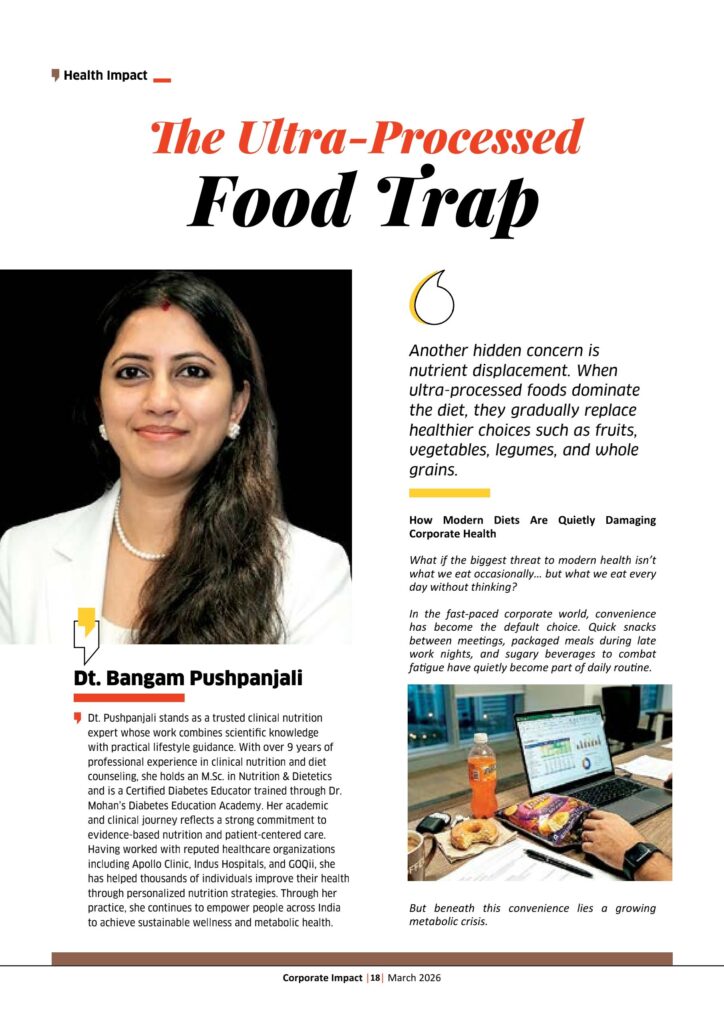
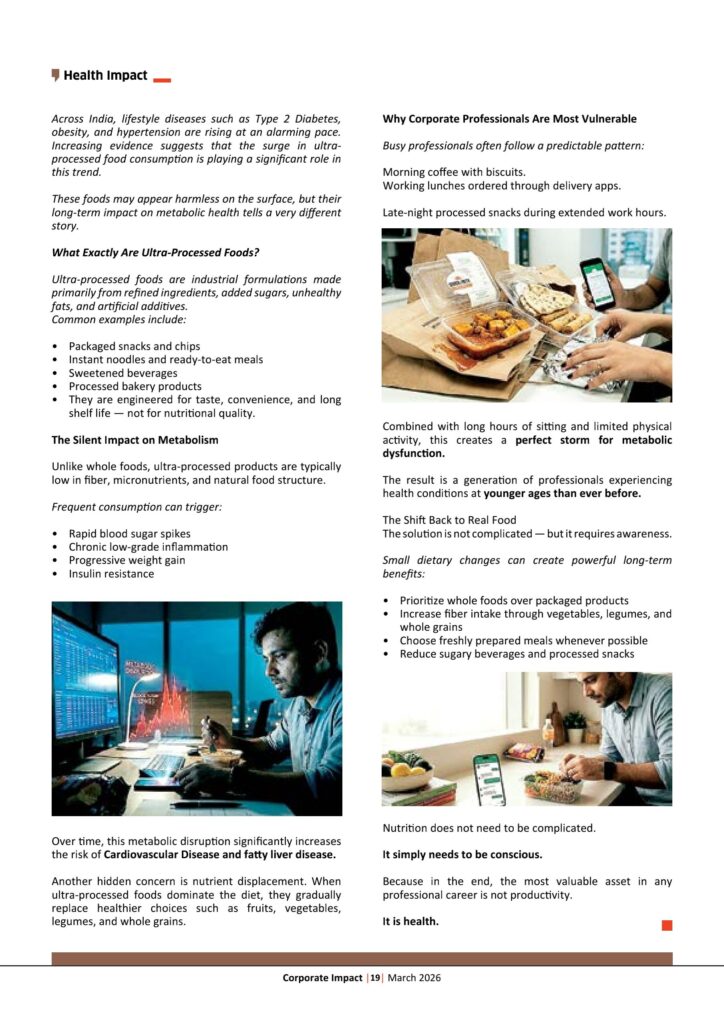
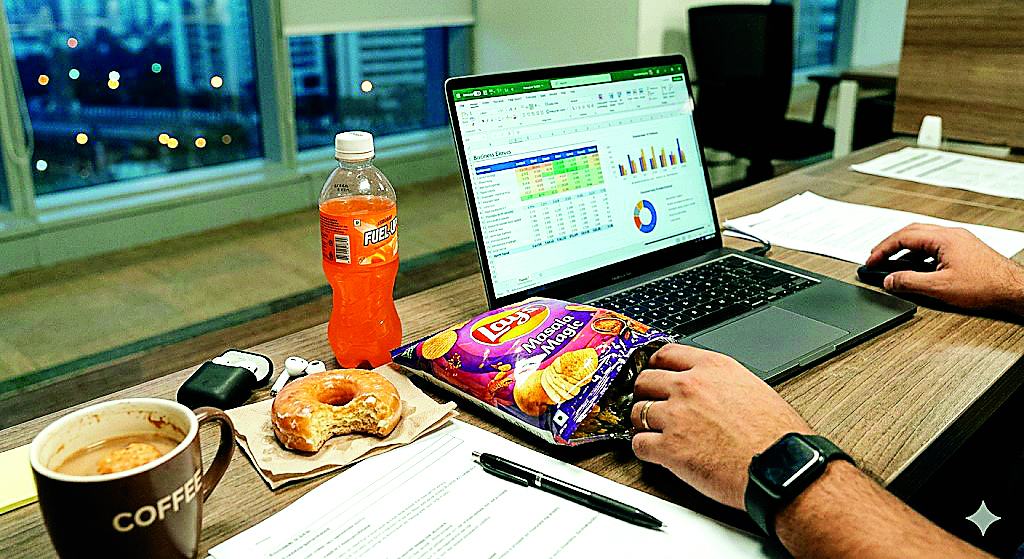
In the fast-paced corporate world, convenience has become the default choice. Quick snacks between meetings, packaged meals during late work nights, and sugary beverages to combat fatigue have quietly become part of daily routine.
But beneath this convenience lies a growing metabolic crisis.
Across India, lifestyle diseases such as Type 2 Diabetes, obesity, and hypertension are rising at an alarming pace. Increasing evidence suggests that the surge in ultra-processed food consumption is playing a significant role in this trend.
These foods may appear harmless on the surface, but their long-term impact on metabolic health tells a very different story.
What Exactly Are Ultra-Processed Foods?
Ultra-processed foods are industrial formulations made primarily from refined ingredients, added sugars, unhealthy fats, and artificial additives.
Common examples include:
• Packaged snacks and chips
• Instant noodles and ready-to-eat meals
• Sweetened beverages
• Processed bakery products
• They are engineered for taste, convenience, and long shelf life — not for nutritional quality.
The Silent Impact on Metabolism
Unlike whole foods, ultra-processed products are typically low in fiber, micronutrients, and natural food structure.

Frequent consumption can trigger:
• Rapid blood sugar spikes
• Chronic low-grade inflammation
• Progressive weight gain
• Insulin resistance
Over time, this metabolic disruption significantly increases the risk of Cardiovascular Disease and fatty liver disease.
Another hidden concern is nutrient displacement. When ultra-processed foods dominate the diet, they gradually replace healthier choices such as fruits, vegetables, legumes, and whole grains.
Why Corporate Professionals Are Most Vulnerable
Busy professionals often follow a predictable pattern:
Morning coffee with biscuits.
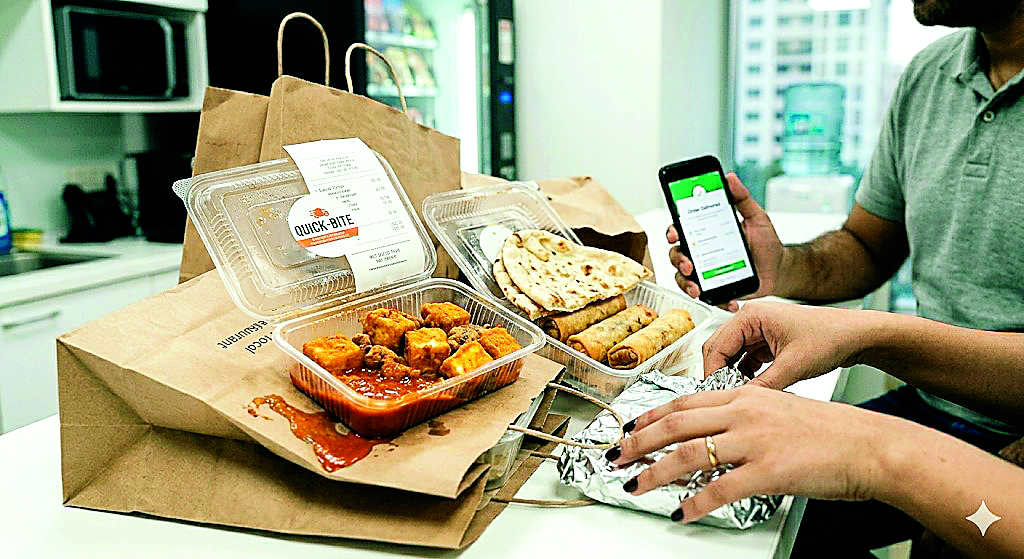
Working lunches ordered through delivery apps.
Late-night processed snacks during extended work hours.
Combined with long hours of sitting and limited physical activity, this creates a perfect storm for metabolic dysfunction.

The result is a generation of professionals experiencing health conditions at younger ages than ever before.
The Shift Back to Real Food
The solution is not complicated — but it requires awareness.
Small dietary changes can create powerful long-term benefits:
• Prioritize whole foods over packaged products
• Increase fiber intake through vegetables, legumes, and whole grains
• Choose freshly prepared meals whenever possible
• Reduce sugary beverages and processed snacks

Nutrition does not need to be complicated.
It simply needs to be conscious.
Because in the end, the most valuable asset in any professional career is not productivity.
It is health.